With Nearly 20 Million BTC Mined, Why is There Less Available Than Ever?

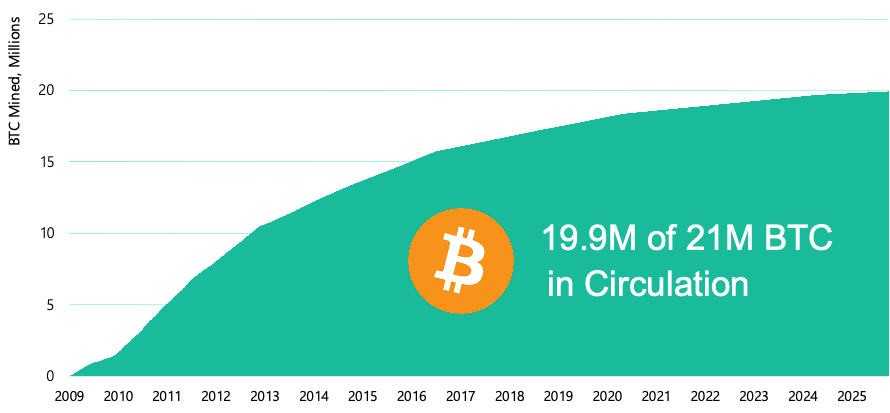
Bitcoin is known for its scarcity. With a hard cap of 21 million coins and nearly 20 million already mined, the world’s most important digital asset – the backbone of crypto – is entering a new era defined by finite supply. Millions of BTC are dormant or lost, and institutional players are removing millions more from circulation. We’ll explore whether we’re witnessing one of the most consequential Bitcoin supply squeezes in history and what it could mean for the future of the network.
A supply squeeze occurs when demand for an asset rises sharply while available supply remains fixed or declines, creating scarcity and upward pressure on accumulation. In traditional markets, this dynamic can trigger everything from commodity booms to stock surges. But Bitcoin presents a uniquely potent case.
Bitcoin’s total supply is capped at 21 million. It cannot be increased, printed, or manipulated to meet surging demand. Unlike fiat currencies or even physical commodities, there is no central authority. Once the cap is reached, no new supply will ever enter the market.
Source: Bitbo.io
This fixed, non-inflationary design is part of what gives Bitcoin its appeal as “digital gold.” But it also sets the stage for extreme scarcity, especially when long-term holders and institutional accumulators begin competing for what’s left.
Source: River.com
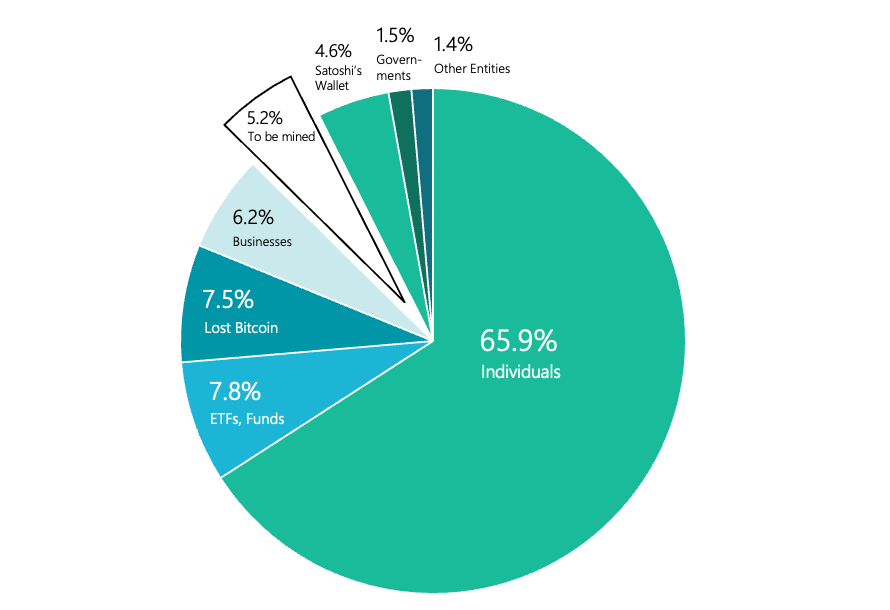
Although nearly 20 million Bitcoins have already been mined, not all of them are accessible. Chain analysis and blockchain forensics suggest that approximately 18% of all mined BTC is dormant, meaning it hasn’t moved in years and is likely lost.
These coins are often tied to wallets from Bitcoin’s earliest days. Back then, Bitcoin was worth pennies, and security protocols were primitive. Private keys were frequently stored on unencrypted hard drives, which were later lost, destroyed, or thrown away. In many cases, the owners have since passed away or forgotten their access credentials entirely.
This means that the actual liquid supply, the Bitcoin that is actually available to be bought or sold, is far smaller than the topline figures suggest. Some estimates put the circulating, accessible supply at under six million coins.
Retail traders once dominated the Bitcoin market. Today, the game has changed. Institutional entities, from asset managers to publicly traded companies, are acquiring Bitcoin not to trade it, but to hold it in long-term custody.
The rise of spot Bitcoin ETFs in the U.S. and other regions has brought with it a structural shift. These funds must hold underlying BTC in cold storage to back each issued share. That Bitcoin is not moved, traded, or reintroduced into the market, meaning it’s effectively removed from circulation.
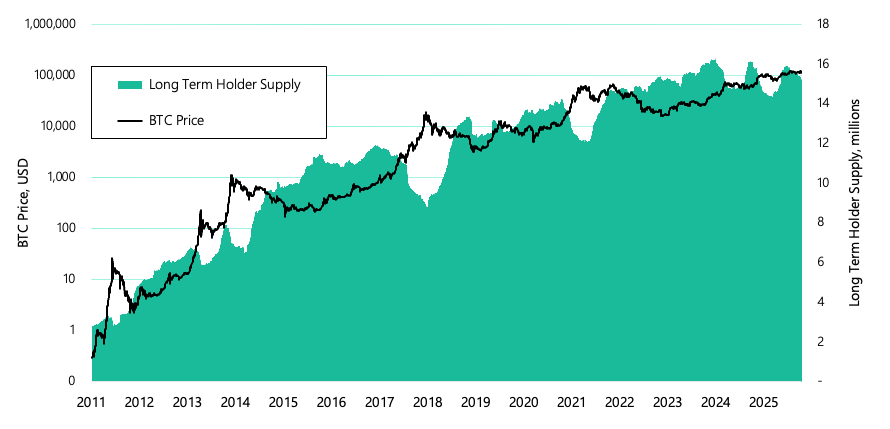
Likewise, corporate treasuries, family offices, and high-net-worth individuals are increasingly treating Bitcoin as a reserve on their balance sheet. This means that as institutional demand grows, a large portion of the already limited supply becomes permanently parked, unavailable for market turnover.
Source: Bitbo.io
Beyond ETFs and corporate treasuries, another category of long-term Bitcoin holders is emerging: banks and governments.
Major banks are now offering Bitcoin custody services, allowing clients to purchase and store BTC directly within traditional financial institutions. While the client technically owns these assets, the BTC is held in institutional-grade cold storage infrastructure that limits liquidity and reinforces long-hold behavior.
Governments are also getting involved. El Salvador famously made Bitcoin legal tender and added BTC to its national reserves, while others are reportedly exploring similar steps. As sovereign entities begin viewing Bitcoin as a strategic asset, the available supply may dwindle further.
These entities represent deep pockets and long-time horizons. They’re not interested in trading, as they aim to store value.
Unlike previous years, the current wave of demand is driven by regulated institutions, sovereign entities, and asset managers with long-term strategies. This time, the nature of demand is different.
Regulated institutions, pension funds, insurance companies, sovereign wealth funds, and other asset managers are playing a growing role in Bitcoin markets. These buyers often have mandates that span decades. Once BTC enters their custody, it rarely, if ever, leaves.
These changes in ownership dynamics are critical. Sticky supply, meaning Bitcoin that doesn’t move, creates a thinner, more illiquid market. It also means that even modest demand increases can produce outsized reactions, especially when there is no supply to meet the demand. With so much Bitcoin being acquired for long-term holding, we may already be living through the early stages of an infinite supply squeeze.
Between dormant coins, institutional treasuries, ETFs, sovereign accumulators, and long-term retail holders, the pool of Bitcoin actually available for purchase is shrinking fast. This is not just a product of cycles or market sentiment, but rather it is a fundamental structural shift in how Bitcoin is used, held, and valued.

The transformation from speculative asset to reserve asset is underway. And with each coin that gets locked away, the trend sharpens. For those watching the Bitcoin supply dynamics unfold, it’s clear: we are not waiting for a supply squeeze. We are already deep in one.

Share this